|
The Subtle Webs We Weave: How Self-Deception Shapes Our Lives
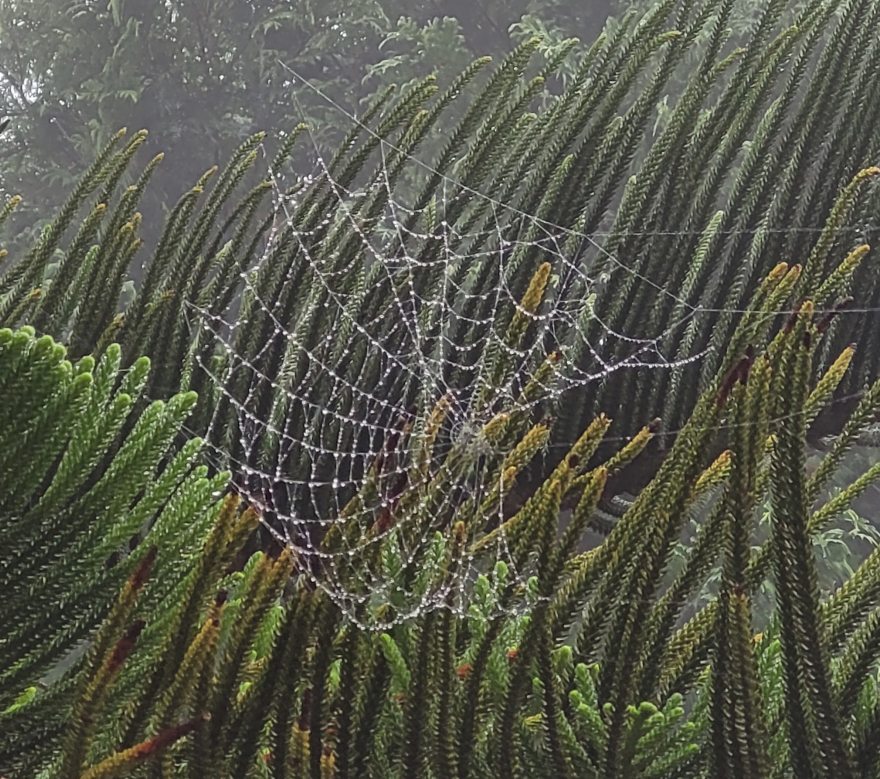
This picture is from a garden in Azores, Portugal — a spider's web, perfectly woven and shimmering in the light, and yet, ultimately, a trap. It caught my eye and brought to mind an old phrase: *What webs we weave when we first learn to deceive."
A spider spins her web at dawn, thread by careful thread. By evening, she has convinced herself it isn't a trap — it's a garden, and the flies are guests, not prey. She built it herself, after all. Surely that makes it true.
That's how self-deception works. No one decides, in one dishonest moment, to believe a lie. We lay down a single thread — *just this once*, *no one will notice* — and the next one comes easier, because the web is already there to hold it. By the time the pattern is visible, we don't see a web anymore. We see home.
The web was never meant to fool anyone else. It fools its maker — one strand at a time — until she can no longer tell what she built from what was simply always true.
A single image can sometimes spark a powerful reflection. This picture of a spider’s web caught my eye—perfectly woven, shimmering in the light, and yet, ultimately, a trap. It instantly brought to mind the phrase: “What webs we weave when we first learn to deceive.”
We often think of deception as something we do to others. We know it isn’t healthy, it damages trust, and it distances us from the people around us. But there’s another, quieter kind of deception that can be even more powerful and far-reaching: the lies we tell ourselves.
What happens when we start deceiving ourselves?
Like a spider’s web, self-deception is built strand by strand—tiny justifications, small denials, half-truths we repeat until they feel real. Over time, these “webs” can:
• Distort how we see ourselves
We might cling to an outdated self-image—“I’m fine,” “I’m not angry,” “I don’t need help”—even when our behavior and feelings tell a different story. This can prevent us from growing, healing, or changing course when we need to.
• Protect us… but at a cost
Self-deception often starts as a form of emotional self-defense. It can help us avoid pain, shame, or fear in the short term. But in the long term, it keeps us stuck. When we can’t face what’s really happening, we can’t respond in a healthy, proactive way.
• Strain our relationships
When we’re not honest with ourselves, it becomes harder to be authentic with others. We might misread situations, project our feelings onto those around us, or react strongly without understanding why. This can create confusion and tension in our closest relationships.
• Block our path to genuine fulfillment
If we tell ourselves stories like “This is the best I can do,” “I don’t deserve more,” or “Nothing can change,” we may stay in jobs, habits, or relationships that don’t serve us. The web of self-deception can quietly hold us in place, even when we long for something different.
Noticing the web
The first step in gently loosening these threads is awareness. You might ask yourself:
• Where in my life do I feel stuck, but keep saying “everything’s fine”?
• Are there truths I avoid because they feel uncomfortable or scary?
• Do my actions and my words about myself truly match?
These questions aren’t about blame; they’re about curiosity and compassion. Just as a spider’s web shows incredible skill and design, our inner “webs” often reflect our attempts to cope, survive, and protect ourselves.
From deception to clarity
The good news is that self-deception is not permanent. As we become more honest with ourselves—bit by bit—we can:
• Make clearer decisions that align with our real needs and values
• Build more authentic, trusting relationships
• Create space for growth, healing, and genuine change
The spider’s web can remind us of two things at once: the beauty of what we create, and the importance of noticing when we’ve built something that traps rather than frees us.
Call to action
Take a quiet moment this week to reflect: Is there an area of your life where you might be gently deceiving yourself? Start with one small truth you’re willing to face. Write it down, sit with it, and see what shifts.
With awareness and honesty, the webs we weave don’t have to be traps—they can become patterns we consciously redesign.
_____________________________________________________________________________________________________________
Sometimes it helps to have someone hold that thread with you. If you're ready to look at what you wrote down, book a free 20-minute call — grab your favourite chai, and let's chat over Zoom about where it might lead.
Chai and Chat
________________________________________________________________________________________
UPCOMING WORKSHOPS
 |
Learn to Read your own Akashic Records
Many describe the Akashic Records as an energetic “library” or field of information that holds the stories, patterns, lessons, and potentials of every soul. You might think of them as a compassionate archive of your soul’s journey—past, present, and the possibilities of what you are becoming.
For some, connecting with the Records offers:
-
Clarity around recurring life patterns or challenges
-
Insight into soul-level gifts and purposes
-
A deeper sense of peace, acceptance, and self-understanding
Sunday, August 30th
11:00 AM Pacific (2:00 PM Eastern)
AR Courses
|
 |
Sainoor Premji B.Sc, M.Sc (Holistic Nutrition), RNCP, MHt, Master Hypnotist, Akashic Reader, Holistic Nutritionist, Montessori School Teacher.
An expert in mind-body-spirit connection, Sainoor has traveled widely on her journey through life- the feedback she received most often from her clients is how wonderful it feels to be free of fear, doubts, and yo-yo dieting; how they now live their lives with hope and lightness.
I must say Sainoor, you bring out the light in me. I appreciate you. - Much love, Cindy
Sainoor, I want to thank you again for all the wisdom and advice you have given me the past few years. You are an inspiration to many humans/spirits - Carmen
|
|